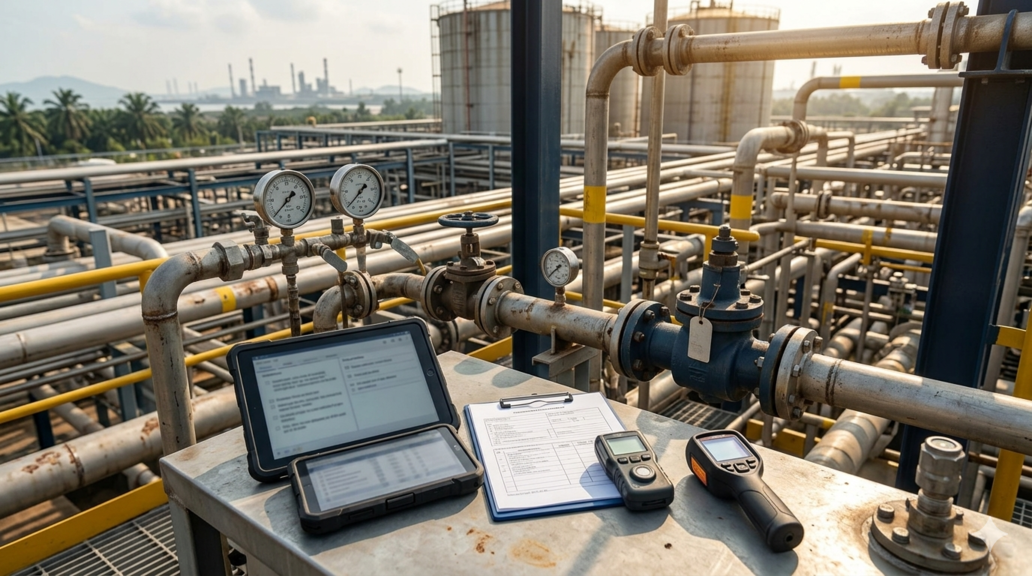
PNA Risk Management provides independent technical safety consultancy services across Malaysia — supporting oil & gas, petrochemical, and chemical facilities with quantitative risk assessment (QRA), HAZOP facilitation, CIMAH compliance, consequence modelling, and process safety management. Our consultants are TÜV-certified and experienced in DOSH and PETRONAS regulatory frameworks.
Conceptual, FEED (Front-End Engineering Design), and Operation, all centered around core Process Safety.
Years of Experience
0+
Our Services
Comprehensive Risk & Safety Solutions
Lifecycle-Wide Support: Comprehensive services that span every stage of a project, from Conceptual design and Front-End Engineering Design (FEED) through to full Operation.
Core Hazard Analysis: Foundational risk identification using industry-standard methodologies such as HAZID, HAZOP, Bow-tie analysis, and SIL determination.
Advanced Technical Modeling: Specialized engineering studies including Quantitative Risk Assessment (QRA), Gas Dispersion, and Flare and Heat Radiation modeling to ensure design safety.
Operational Integrity & Compliance: Long-term asset protection through Integrity Management Plans, RAM (Reliability, Availability, and Maintainability) studies, and formal Safety Case development.
Establish Context
Determine key business objectives,
processes & resources
Identify & Assess Risks
Identify, analyse, rate & prioritise
risks
Risk Mitigation Measures
Implementation of Risk Mitigation Measures
Monitor & Review
Review operation of controls &
continuing suitability of other
treatments
Our Scope of Services
Hazardous Area Classification
Identifying and zoning areas where flammable gases, vapors, or dust may form explosive atmospheres. This ensures that electrical and mechanical equipment are correctly rated and installed to prevent ignition sources in high-risk environments.
A systematic, proactive review of industrial processes using methodologies such as HAZOP, FMEA, or "What-if" analysis to identify and evaluate potential deviations that could lead to safety incidents or operational failures.
Utilizing advanced modeling software to calculate the physical impact of accidental releases. This includes assessing the size and severity of potential fire radiation, blast overpressure, and toxic gas dispersion to inform emergency planning.
A structured, evidence-based approach to identifying and managing major hazards. This assessment demonstrates that all safety-critical elements have been evaluated and that risks are managed in accordance with industry best practices.
A data-driven numerical evaluation that models the likelihood and consequences of hazardous events. It is used to calculate individual and societal risk levels, ensuring they remain "As Low As Reasonably Practicable" (ALARP).
Navigating statutory frameworks to ensure facilities meet all legal obligations. This includes the preparation of CIMAH/COMAH safety reports, Chemical Health Risk Assessments (CHRA), and formal submissions to regulatory bodies like DOSH and DOE.
Alarm Rationalization is a critical component of modern Process Safety Management (PSM) aimed at ensuring that control room alarms are meaningful, actionable, and effective in supporting operator decision-making during normal.
A high-level, proactive study typically performed during the early stages of a project lifecycle. It focuses on identifying major potential threats to people, assets, and the environment before they can impact project design or timelines.
Fire and Gas Detector Mapping is a specialized engineering study used to evaluate and optimize the placement and effectiveness of fire and gas detection systems within industrial facilities.
Air Dispersion Modelling (ADM) is a critical component of environmental and regulatory studies, used to predict the spread and concentration of airborne pollutants from industrial activities.